

Skin Ulcers & Scleroderma: Complications and Treatments
How are Raynaud’s Phenomenon and Digital Ulcers related?
Patients with repeated episodes of Raynaud’s phenomenon are also at risk for toe or finger ulcers. In primary Raynaud’s, vessels narrow and then return to their normal size. However, in scleroderma, where Raynaud’s is secondary, the skin’s tiny blood vessels become increasingly smaller, or may become damaged over time. Sometimes they disappear entirely. Both Raynaud’s and digital ulcers occur in scleroderma because of narrowed blood vessels.
When blood vessels lose the ability to return to their normal size between attacks, this leads to a reduced supply of oxygen and nutrients to the skin. This can result in dry, cracked skin and the formation of small ulcers on the fingers or thumbs or toes. Digital ulcers may also form at areas of pressure, trauma, or where calcium deposits (calcinosis) are present. In severe cases, infection may develop.
Frequency of these ulcers is variable. These ulcers may happen from time to time (episodic), recurrent, or not be healing (chronic), and in some cases, they can lead to infection or tissue damage if left untreated.
How Can You Prevent Skin Ulcers in Scleroderma?
- Avoid stress and cold
- Keep as warm as possible
- Wear layers of clothing
- Wear hats in cold weather
- Wear shoes and socks that provide room for circulation
- Use Band-Aids
- Protect your hands and feet from cuts, pressure, and injury
Treatments for Scleroderma Skin Ulcers
Basic wound care and over-the-counter (OTC) medications may help with healing and pain management. Medications for skin ulcers in scleroderma may also be recommended. These include:
- Calcium channel blockers
- Endothelin receptor blockers
More serious cases of skin ulcers may require wound care, treatment of infections, and medication to improve blood flow. If the tissue is too damaged to heal, your doctor may recommend surgery, or even amputation might be needed. Early treatment is important to help reduce pain, prevent infection, and protect healthy tissue.
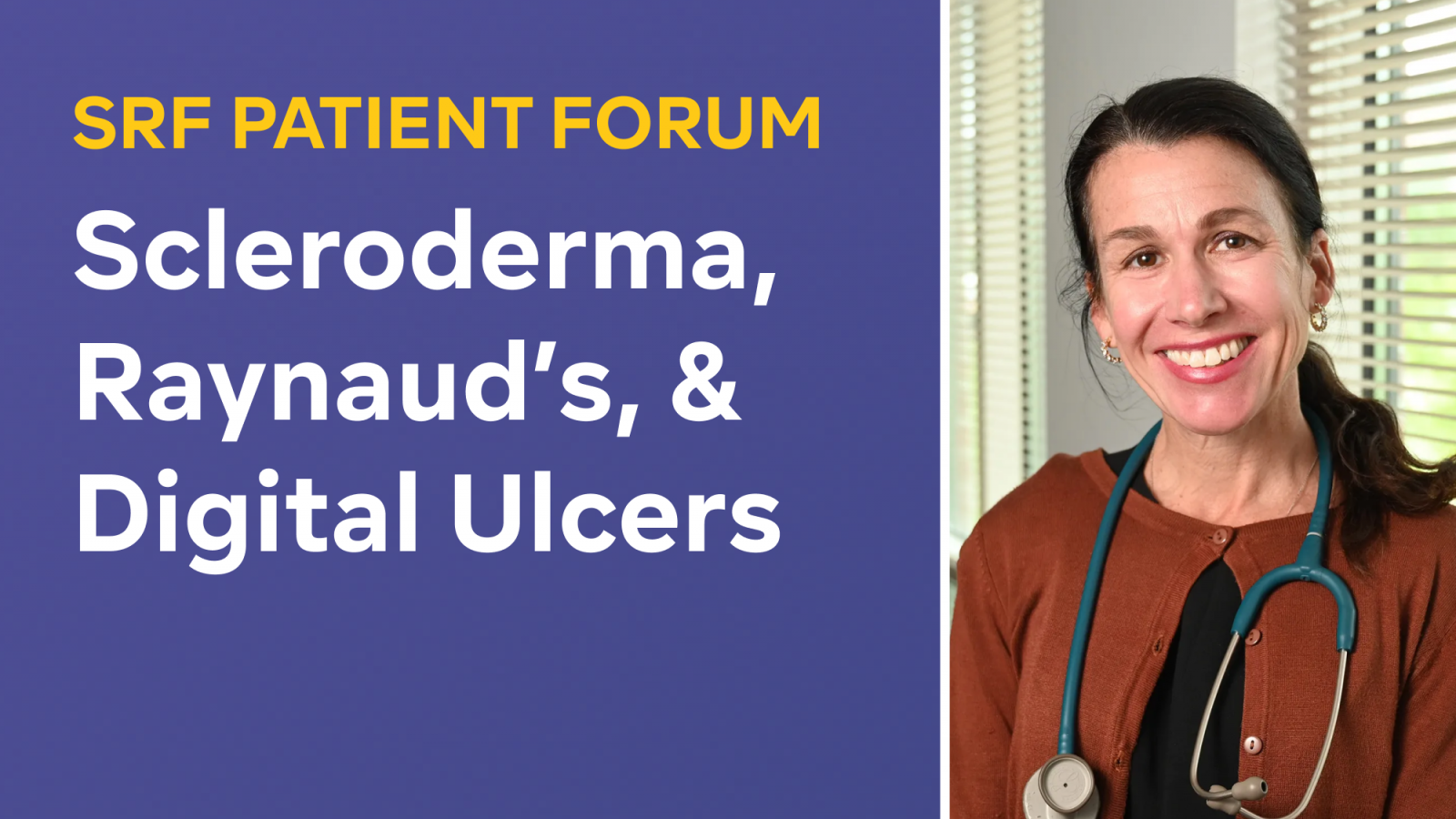
SRF Webinar on Raynaud’s and Digital Ulcers in Scleroderma
Tracy Frech, MD, MS, from Vanderbilt University, breaks down the science behind Raynaud’s phenomenon and digital ulcers in systemic sclerosis and discusses the latest treatment approaches.