When working on a rare disease like scleroderma, it can be difficult for scientists and drug companies to develop strong pipelines for new treatments. The Scleroderma Research Foundation (SRF) realized this was a real issue for the scleroderma community, so we created CONQUEST.
CONQUEST is a platform clinical trial, which means it can evaluate multiple investigational study drugs at the same time. Currently, it is evaluating two investigational study drugs for scleroderma. Over time, CONQUEST plans to look at more investigational study drugs, which we can add to the platform.
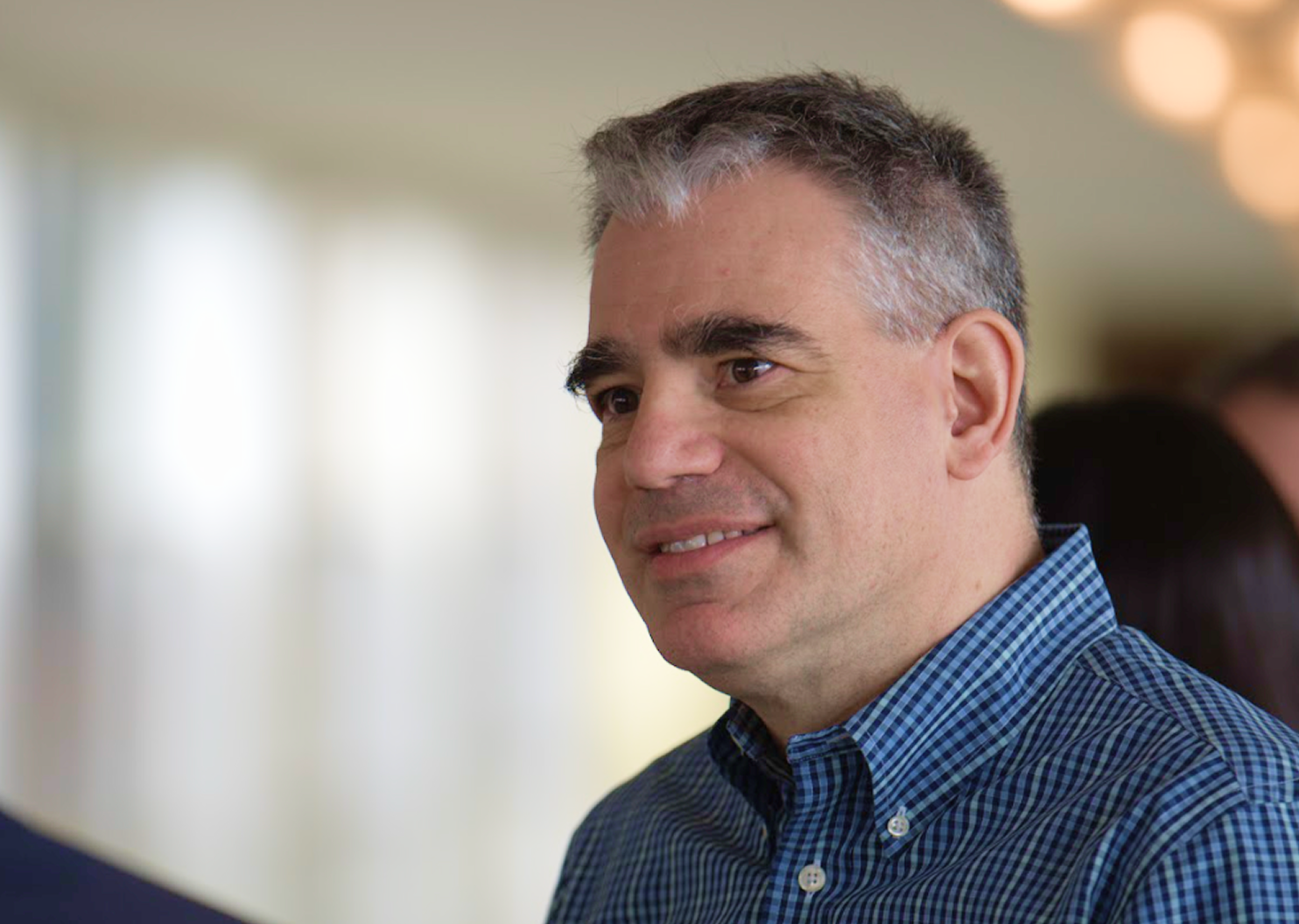
We sat down with Gregory Gordon, MD, the SRF’s first-ever Chief Medical Officer and leader of CONQUEST strategy and operations, to learn more about CONQUEST, its design, and why it’s truly a huge step forward for not just the SRF but for the entire scleroderma community.
Q: Can you give us a quick refresher—how do traditional clinical trials usually work?
A: In a traditional trial, researchers test one experimental treatment at a time. Patients are randomly assigned to either receive the treatment or a placebo, which looks and tastes the same but doesn’t contain the active drug. These trials usually last about a year, and comparing the two groups helps us see if the treatment actually works.
Q: What’s different about a platform trial?
A: The big difference is that a platform trial lets us test multiple treatments at the same time using shared infrastructure—including one common placebo group. This makes it faster, more cost-effective, and more efficient than running several separate trials.
Think of a traditional clinical trial like building an entire soccer stadium just to play one game—and then tearing it down afterward. It takes a ton of time and resources. With a platform trial, we still build that stadium, but instead of using it for just one game, we use it to host many. It’s a smarter, more sustainable way to test new treatments.
Q: Why is using a shared placebo group important for patients?
A: In your typical traditional trial, about half the participants are assigned to the placebo. But in a platform trial, we only need one shared placebo group for all the treatments being tested. That means more patients are likely to receive an active treatment, which is something we know patients really care about.
Q: What happens to all the data you gather from the placebo group?
A: When a pharmaceutical company runs a study, they own the data, and it can be difficult for others to access it. In CONQUEST, the SRF will own the data from the placebo patients, and we’re committed to making the data and our findings accessible, so that researchers can use this information to unravel scleroderma’s mysteries
Q: Who else is running a platform trial like this?
A: This platform trial design is still relatively new. It was first used in oncology trials, which is where we drew our inspiration from. But what’s exciting is that no one else is trying this in rheumatology yet. By creating it for scleroderma, we’re hoping to pave the way for others working on rheumatic diseases to explore innovative ways of testing new therapies.
Q: Who benefits from a platform trial like CONQUEST?
A: Everyone involved, really. Patients get a better chance of receiving active treatment and know their participation will have a long-term impact. Investigators get access to multiple experimental therapies through one trial, and they become part of a global research network. And for the broader research community, the SRF is creating a unique placebo dataset that will help us design better, faster trials in the future.
Q: What’s next for CONQUEST?
As we move forward with the first iteration of CONQUEST, we’re already looking ahead. The trial is designed to evaluate not just the current investigational therapies, but many more to come. In 2024, we built the foundation—developing the trial structure and infrastructure—and in 2025, we’re putting that structure to work by accelerating patient enrollment. We’ve already opened the majority of our planned sites—more than 100 across the U.S.—and we’re planning to open the rest of the 165 total.