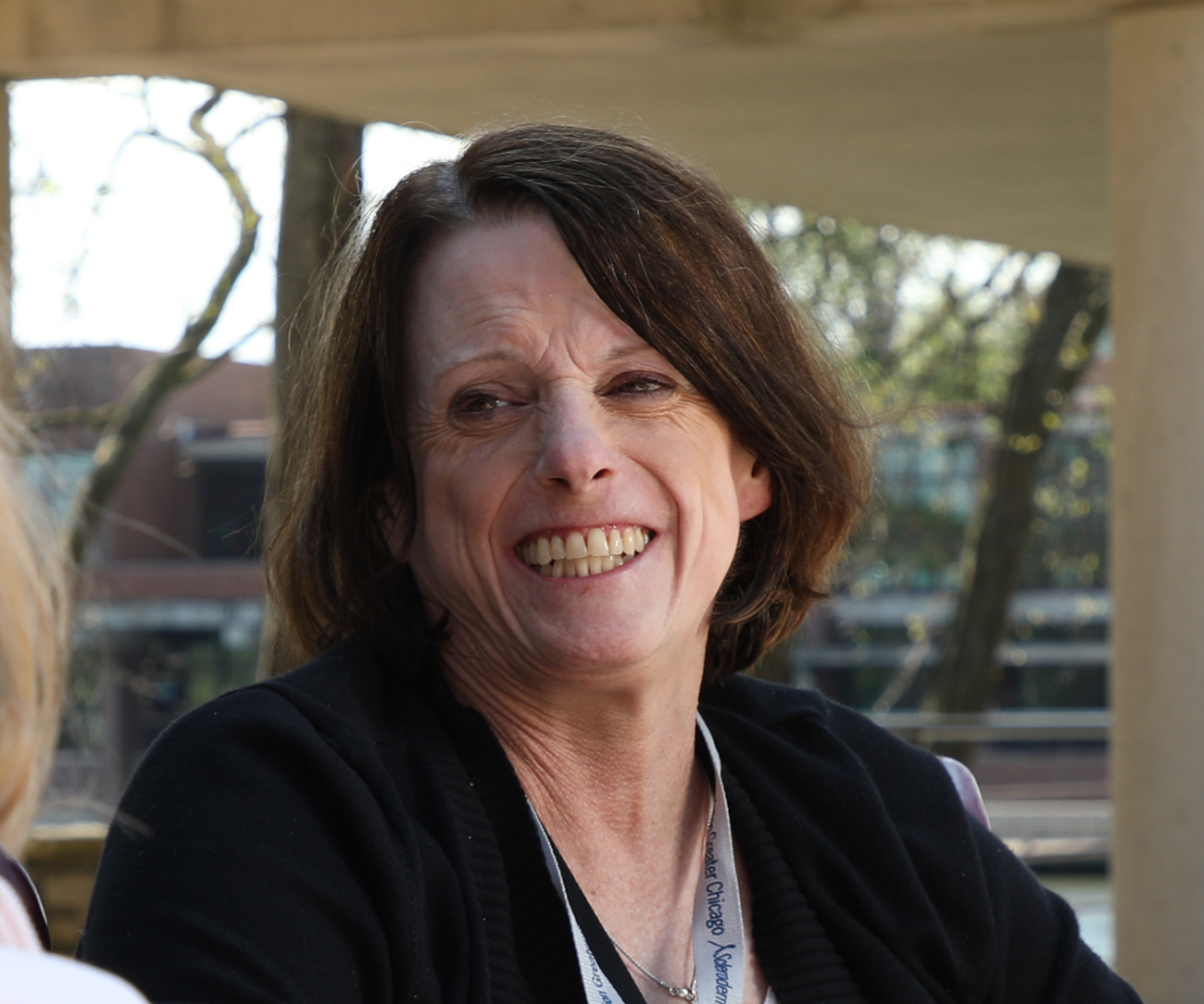
“A year after I was diagnosed with scleroderma, I started to get very winded walking very short distances,” Jackie L. remembers. “After testing, I received a diagnosis of interstitial lung disease and secondary pulmonary hypertension.”
Jackie first noticed changes in early 2011 when she began waking up with her hands completely asleep. “I would hold them up in the air and could feel the blood going down my arm to make the tingling go away,” she says. Soon her fingers became painfully swollen and swelling spread to her ankles, knees, and elbows. Her primary care physician immediately recognized these as serious symptoms and referred her to a rheumatologist.
That referral ultimately led to her scleroderma diagnosis in December 2011. “I vividly remember the moment when my doctor turned me to me and said, ‘I’m pretty sure I know what you have… I think you have scleroderma,'” she recalls. After seeking a second opinion, her diagnosis was confirmed as diffuse systemic scleroderma.
About a year into her scleroderma journey, Jackie began noticing changes in her breathing. Her lung symptoms steadily intensified; she started medications to support her lung function and manage fibrosis, began seeing a pulmonologist, and adjusted to new limitations in her mobility and energy.
As the years went on, Jackie’s scleroderma continued to affect more of her body. She developed Raynaud’s, osteoporosis, gastrointestinal dysmotility, and enteritis—conditions that added new layers to her daily challenges. In 2021, she also received a stem cell transplant as part of her ongoing treatment. Through it all, Jackie has remained focused on staying informed and connected with the community.
“I share my story because it will help raise awareness, especially for people that have not gotten diagnosed,” she says. Jackie now participates in support groups, stays closely involved with the scleroderma community, and contributes to focus groups and patient panels for medical students. As well, last June, she posted daily on Facebook throughout Scleroderma Awareness Month, documenting every symptom leading up to her diagnosis so others might recognize the early signs sooner.
As someone who has faced both scleroderma and pulmonary hypertension, Jackie is a strong believer in the power of research. “I am an advocate for research because scleroderma is so different for so many patients,” she says. “Researchers are stepping up and looking for ways to help with some of the symptoms that patients have to go through. It is so important because that’s how they are going to find a cure!”
Thank you, Jackie, for sharing your story. November is Pulmonary Arterial Hypertension (PAH) Awareness Month—a time to recognize how PAH affects people living with this chronic condition, and to highlight the importance of early screening, symptom awareness, and ongoing research.