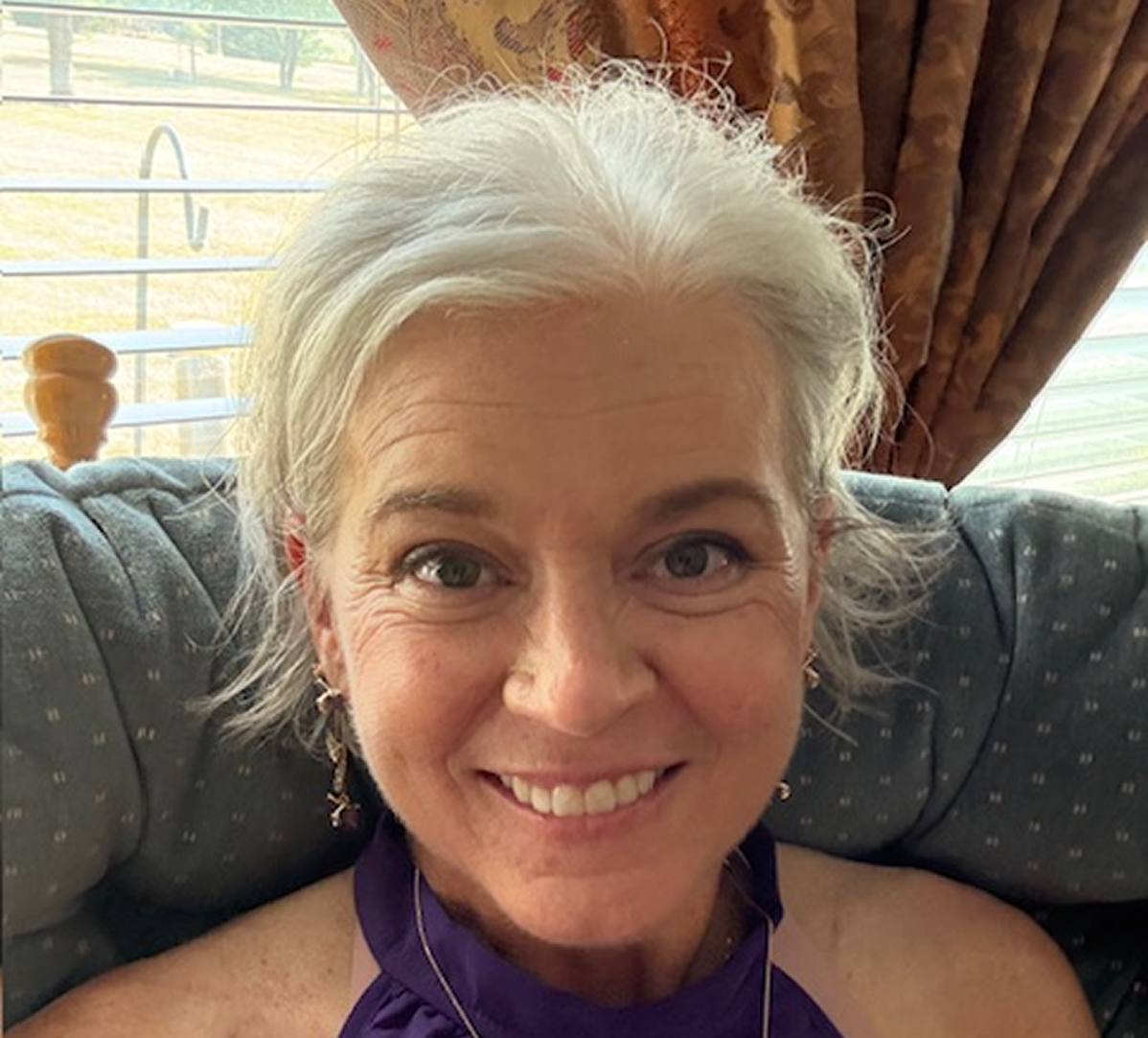
“Living with PAH and scleroderma has been difficult, but it was manageable,” says Barb H. (dx 1994.) “It never stopped me from doing something I really wanted to do.”
Barb was first diagnosed with scleroderma at age 22, in 1994. “At the time, the doctor could not tell me what form of scleroderma I had and I was told that I might not live to be 30,” she says. “I spent the first four years struggling with scleroderma alone. Then I met another woman with scleroderma. At that moment, I knew I would never be alone in my struggles again.”
For Barb, the path to her pulmonary arterial hypertension (PAH) diagnosis was a long and winding one. Despite years of knowing something wasn’t right, it took more than two decades after her scleroderma diagnosis for testing to confirm PAH. “I was started on supplemental oxygen, but was needing much more than prescribed during exertion,” she recalls. “A right heart catheterization finally detected the PAH three months later—26 years after my scleroderma diagnosis.”
“My first PAH symptom was shortness of breath when climbing stairs. I could feel it, but the tests did not show any abnormalities,” she says. “I had been diagnosed with limited systemic scleroderma for 19 years at this point. It would be another seven years before any test detected a problem.”
Even as her PAH progressed, she kept moving forward—culminating in a double lung transplant on December 5, 2024. “How amazing it is that we live in a world where this is possible for scleroderma warriors with PAH!” she says. “Who knows what might be available next year?”
Barb’s advice to others newly diagnosed with PAH is simple but powerful: “Stay active. I know it’s hard to carry oxygen tanks and feel like people are looking at you, but living your best life is what’s important. Take a walk, ride a bike—show people how strong you are.”
This November, during PAH Awareness Month, Barb’s story is a reminder of the importance of early screening, continued research, and staying hopeful about what’s ahead.
“Scleroderma research is so very important to me because I want a cure,” she says. “If a cure isn’t found, I hope for more treatments to control Raynaud’s, sclerodactyly, GI issues, calcinosis—all of it. These are possible through research.”